
Introduction
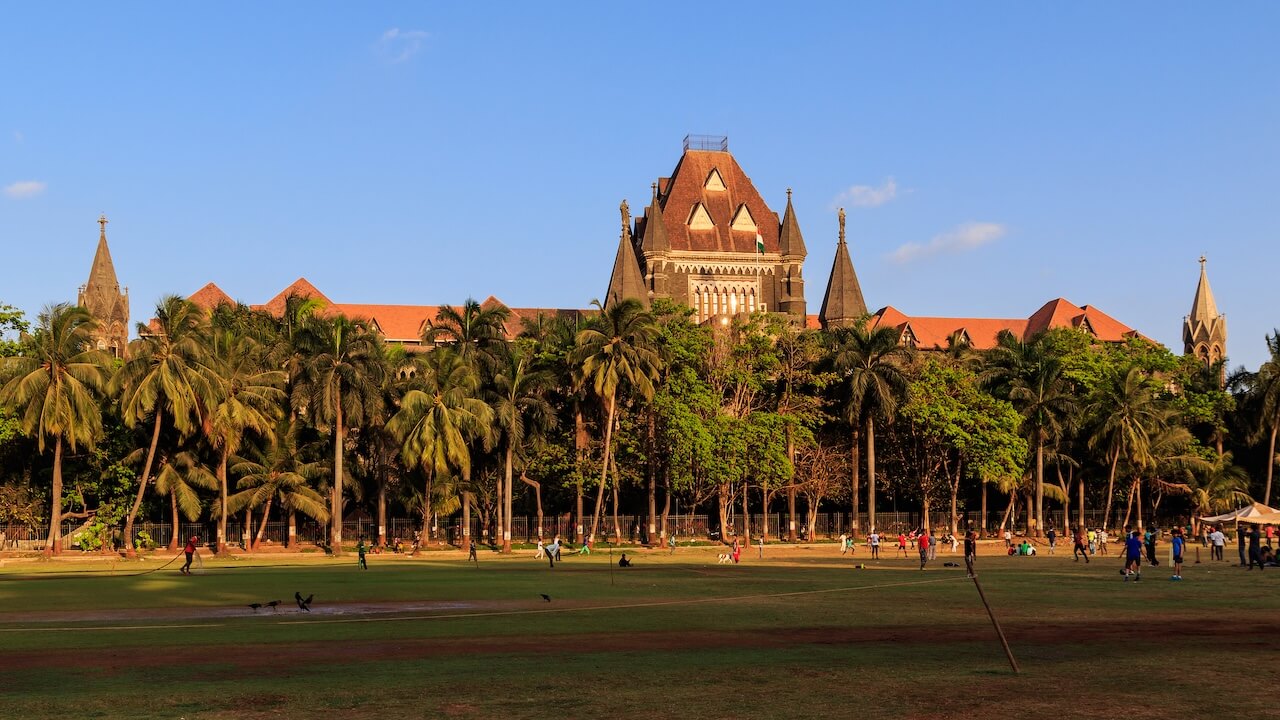
In D S Textiles v. IIFL Finance Limited [Arbitration Petition (L) No.12097 of 2026], the Hon’ble Bombay High Court delivered a significant judgment reaffirming that unilateral appointment of arbitrators is fundamentally inconsistent with the principles of independence, impartiality and equal treatment under the Arbitration and Conciliation Act, 1996 (“Act“).
Brief background
The petitions filed before the Hon’ble Bombay High Court arose from arbitration proceedings initiated by IIFL in which a sole arbitrator was appointed without equal participation of the counterparty in the constitution of the tribunal. The said proceedings were challenged on the ground that the arbitral tribunal had been constituted through a unilateral appointment process. The Hon’ble Court noted that each petition formed part of a broader pattern involving non-banking financial companies appointing arbitrators who proceeded to pass urgent interlocutory orders, often without disclosing the manner in which the tribunal had been constituted.
Despite IIFL’s attempt to withdraw the arbitration proceedings, the Hon’ble Court examined the broader issue of routing unilateral appointments through institutional mechanisms, addressing what it regarded as an emerging practice aimed at circumventing the law declared by the Hon’ble Supreme Court.
Judicial notice of growing trend
The Hon’ble Court took judicial notice of an increasing trend, particularly among non-banking financial institutions and scheduled commercial banks, of attempting to mask one-sided appointments by purporting to appoint arbitrators through an ‘institution’ or algorithm-based selection process. In substance, these entities retained exclusive control over the tribunal’s constitution, while presenting a veneer of institutional neutrality. The Hon’ble Court described the modus operandi in which such arbitrations proceed on the assumption that many counterparties will not challenge the process and may instead settle, thereby enabling recoveries based on interim orders such as attachments under Section 17 of the Act. Where a counterparty does challenge the appointment, the appointing party often volunteers to withdraw the proceedings, thereby attempting to avoid an authoritative ruling on the legality of the process.
Only two legally recognised modes of appointment
The Hon’ble Court reaffirmed that in law there are only two recognised methods of appointing an arbitrator: (i) by consent of the parties; or (ii) by a court exercising jurisdiction under Section 11 of the Act. The Court made it explicit that any third method of appointment, including a process described as institutional or algorithmic, when triggered unilaterally by one party, cannot be ‘whitewashed’ or treated as compliant with the Act.
Institutional routing as a ‘Colourable and manipulative device’
On the central question of whether routing appointments through an institution could cure a flawed appointment process, the Hon’ble Court held that merely involving an institution cannot cure a foundational defect in the tribunal’s constitution. It described the practice of having an institution chosen unilaterally by one party purporting to appoint a sole arbitrator, as wholly untenable and completely illegal and characterised it as a ‘colourable and manipulative device to circumvent the law declared by the Hon’ble Supreme Court’.
The Hon’ble Court distinguished this from a situation where the parties, by mutual agreement, designate a named arbitral institution in the arbitration clause itself. In such a scenario, the institutional mechanism reflects bilateral party autonomy. However, where one party alone selects the institution and initiates the appointment process, institutional involvement does not sanitise what remains, in substance, a unilateral appointment. The Hon’ble Court warned that this pattern, including withdrawals upon challenge, lends arbitration a bad name and inflicts long-term damage to alternative dispute resolution mechanisms.
Reliance on Perkins Eastman, Central Organisation and Bhadra International
Relying on Perkins Eastman Architects DPC v. HSCC (India) Ltd. [(2020) 20 SCC 760], Central Organisation for Railway Electrification ECI SPIR SMO MCML (JV) A Joint Venture Company [(2025) 4 SCC 641] and Bhadra International (India) Pvt. Ltd. & Ors. v. Airports Authority of India [2026 SCC OnLine SC 7], the Hon’ble Court reiterated that equal participation in constituting the arbitral tribunal is a foundational element of arbitral fairness and that equal treatment of parties in the appointment process has always formed part of the statutory scheme of the Act. The Hon’ble Court emphasised that the Hon’ble Supreme Court has now authoritatively held that party autonomy does not override the principle of equal treatment of parties. Even where an arbitration agreement confers a unilateral right of appointment, such a clause remains fundamentally inconsistent with the statutory requirement of independence and impartiality. While nomination rights in a multi-member tribunal may be counter-balanced, a situation where only one party possesses the exclusive right to appoint a sole arbitrator is inherently objectionable and inconsistent with the scheme of the Act.
Directions to the audit committee of the Board of Directors of IIFL
In a notable set of directions, the Hon’ble Court ordered that a copy of the judgment be placed before IIFL’s Board of Directors and its Audit Committee, to ensure that those responsible for governance are made aware that practices contrary to the law declared by the Hon’ble Supreme Court are being adopted. The Hon’ble Court also directed IIFL to frame appropriate policies ensuring compliance with the law governing arbitral appointments.
Analysis and key takeaways
The decision in D S Textiles v. IIFL Finance Limited reinforces that the validity and legitimacy of an arbitral tribunal depends on the fairness and neutrality of the appointment process itself. The Hon’ble Court emphasized that arbitration must be fair at the very foundation stage, when the tribunal is being appointed. The judgment serves as a reminder that arbitration clauses must be structured to ensure genuine parity between the parties and to avoid conferring unilateral authority over the constitution of the tribunal. Any mechanism that enables one party to retain unilateral control over the tribunal’s constitution is likely to invite judicial intervention and may be treated as a foundational defect that cannot be cured by subsequent procedural steps.
Link to judgment: Click here.