
Introduction
The Repealing and Amending Act, 2025 (“the Repealing Act”) received presidential assent on 20December 2025. Mostly a housekeeping Act, it repeals 71 amending enactments and makes amendments to 4 major statutes – the General Clauses Act, 1897, the Code of Civil Procedure, 1908, the Disaster Management Act, 2005 and the Indian Succession Act, 1925 (“Succession Act”). The amendment to the Succession Act for omitting Section 213 however, is particularly significant. For nearly a century, that provision made probate a condition precedent to enforcing rights under certain Wills. Its removal marks a shift in how testamentary rights are established in India.
The old regime under Section 213 of the Indian Succession Act, 1925
For Hindus, Buddhists, Sikhs and Jains (and later Parsis too, as per the 1962 amendment to the Succession Act), it was mandatory to obtain probate or letters of administration from a competent court, to establish rights under a Will, if the Will was executed within, or involved immovable property situated within, the local jurisdiction of the High Courts of Bombay, Calcutta, or Madras. The result of this regime was a patchwork in which Wills, made by persons of different faiths or relating to property in different cities, was treated differently.
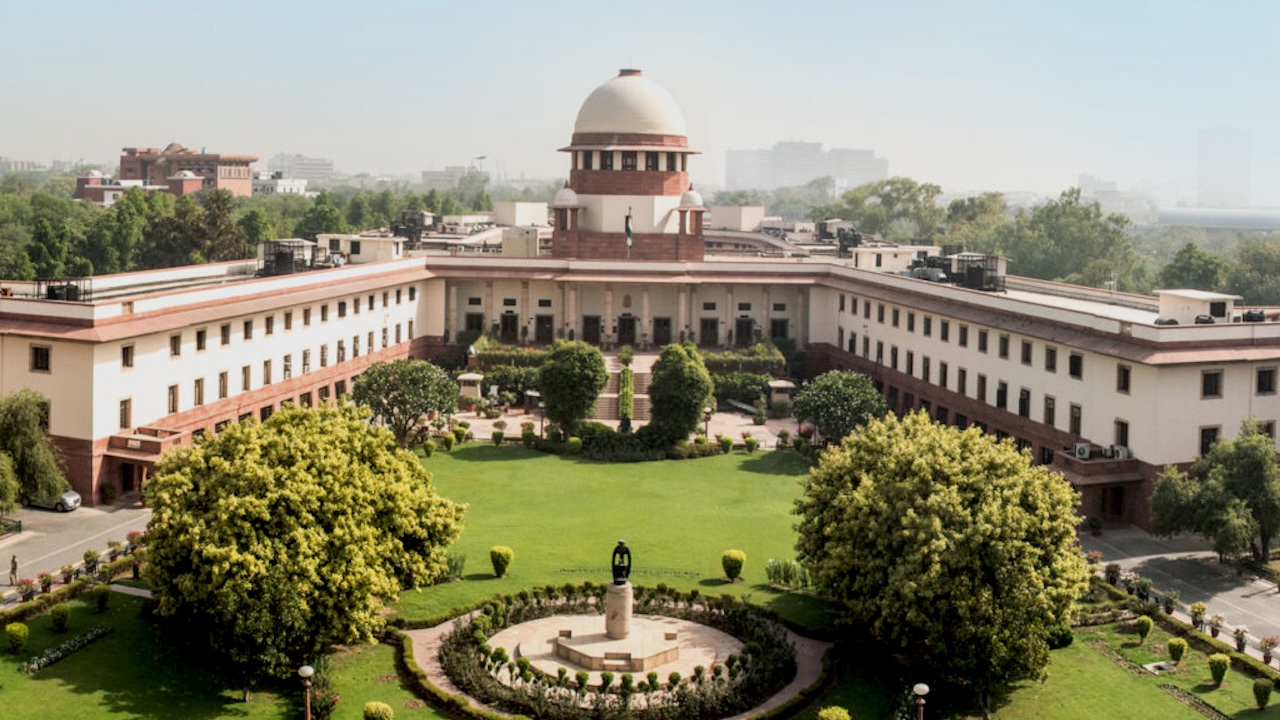
The constitutionality of Section 213 of the Succession Act was challenged before the Supreme Court of India as being violative of Article 14 of the Constitution of India in the case of Clarence Pais v. Union of India [(2001) 4 SCC 325]. While the Supreme Court upheld the constitutional validity of the provision, it recognised that greater uniformity in the law was desirable and observed that the States and the Union ought to remain alive to the issue.
The new regime post the Repealing and Amending Act, 2025
By the Repealing Act, Section 213 of the Succession Act stands deleted. As a result, probate is no longer a mandatory pre-condition for establishing rights as executor or legatee, irrespective of the religion of the testator or the location of the property. Consequential changes to Sections 3 and 370 of the Succession Act ensure that the grant of succession certificates no longer refers to Section 213 or to grant of probate.
The change is prospective in nature. Section 4 of the Repealing Act expressly preserves actions already taken, rights and liabilities already accrued, and proceedings that are pending or concluded. The reform simply lifts the procedural burden going forward.
Practically, the benefits of deleting Section 213 are evident. Removing the requirement for probate will cut time, expense and administrative friction for legatees/ executors establishing their rights. It will also seemingly reduce the courts’ workload.
However, there are also several legal and administrative challenges that the amendment creates.
Challenges ahead
The function that probate performs is considerable. It subjects a Will to judicial scrutiny. As such, its genuineness, execution and validity are tested by a competent court. This results in a formal judicial confirmation that gives concerned parties and external bodies the confidence to act on the Will and provides a protection against disputes.
A significant question that also remains is how societies, banks and other authorities will behave in practice. Even since the enactment of the Repealing Act, long-standing habits remain of authorities and other bodies proceeding with the distribution of the deceased’s estate only after probate has been obtained. Furthermore, the Repealing Act creates some uncertainty regarding the practical manner in which testamentary rights will be established going forward.
Analysis
The reform shifts the responsibility from the law to the individual. Probate being non-mandatory offers some simplification. However, for estates with substantial assets, complex family arrangements or valuable commercial interests, it may well remain the wiser option, offering finality and a strong defence against future disputes. Undoubtedly, the repeal makes careful estate planning more important. Furthermore, courts and legal practitioners will now play a critical role in guiding through the process of property transfers, title searches, and dispute resolution where a Will’s validity is challenged without a probate order.